Monte Carlo Methods
in Statistical Physics and Field Theory
Lecturer: | Dr. Wolfgang Unger | unger at th.physik.uni-frankfurt.de | Room 02.105 |
Lecture: | Wed. 9:15-10:45 in Room 02.114 |
Exercises: | Mo. 14:00-15:00 in Room 02.114 |
|  |
Content: |
► Markov Chains, Sampling
► Algorithms (Metropolis, Heatbath, Cluster, Worm)
► Models (Hard Spheres, Spin Systems, Dimer Systems, Bose Gas, Lattice Gauge Models)
► Phase Transitions, Critical Phenomena
|
Prequisites: |
Course in Quantum Mechanics and Statistical Mechanics, Basic Programming Skills (any language will do) | |
 |
 |
 |
 |
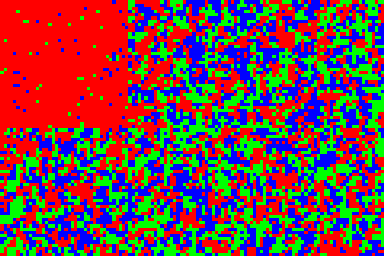 |
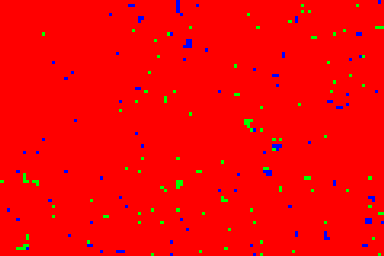
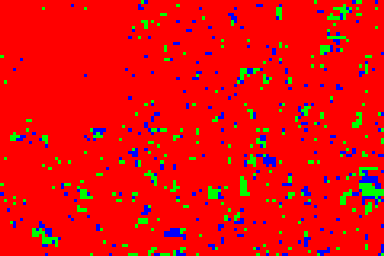
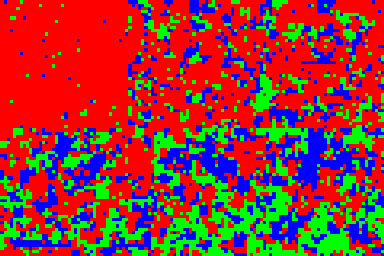
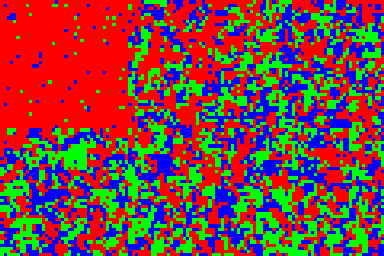
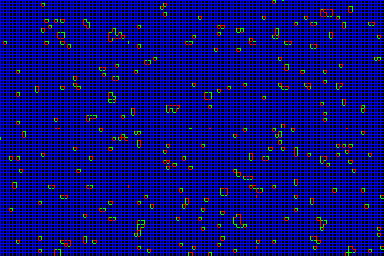
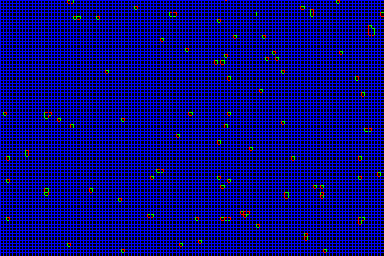
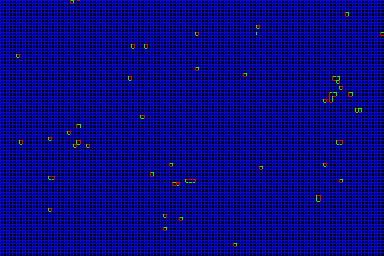
3-state Potts Model on 20x20 square lattice,
Metropolis algorithm |
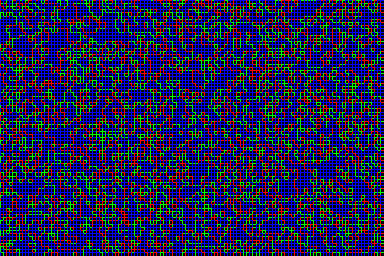
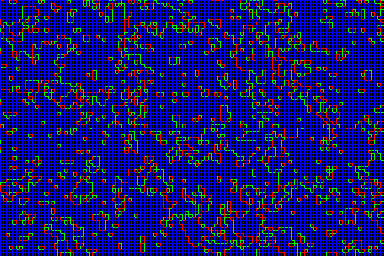
| T=0.8 |
T=1.0 |
T=1.2 |
T=1.4 |
T=1.6 |
 |
 |
 |
 |
 |
3-state Potts Model on 20x20 square lattice,
Worm algorithm |
Lectures: (preliminary, subject to change)
The lecture notes will be published successively after each lecture.
► Lecture 1 (16. Oct. '13): Introduction, Historical Remarks, 5 Ways to compute π
► Lecture 2 (23. Oct. '13): Basic Sampling, Monte Carlo Integration
► Lecture 3 (30. Oct. '13): Importance Sampling, Basic Facts in Probability Theory
► Lecture 4 (06. Nov. '13): Markov Chains, Markov Chain Monte Carlo
► Lecture 5 (13. Nov. '13): Percolation, Random Walks, Equilibrium Monte Carlo
► Lecture 6 (20. Nov. '13): Hard Discs and Spheres, Heatbath Algorithm
► Lecture 7 (27. Nov. '13): Ising Model (Low/High Temperature Expansion, MC in d>2)
► Lecture 8 (04. Dec. '13): Potts Model
► Lecture 9 (11. Dec. '13): Cluster Algorithm, Worm Algorithm
► Lecture 10 (18. Dec. '13): Entropic Forces, Dimer Systems
► Lecture 11 (15. Jan. '14): Path Integrals, Anharmonic Oscillator
► Lecture 12 (22. Jan. '14): Relativistic Bose Gas
► Lecture 13 (29. Jan. '14): Lattice Gauge Models
► Lecture 14 (05. Feb. '14): Compact QED
► Lecture 15 (12. Feb. '14): Yang-Mills Theory, SU(2), Outlook for QCD
Exercises:
► To qualify for the oral exam (you can earn 4 CP, subject to the decision of the Prüfungsamt),
you need to get 50% of the points from the homework.
► The sheets consist of about 70% computing exercises and 30% paper and pencil exercises.
The points of each sheet sum up to 20 points.
► Computing exercises should be handed in as a short report, explaining the approach and summarizing the result.
Also, the code should be sent to me prior to the tutorial on mondays.
We will discuss the solutions immediately, hence I cannot accept solutions after this deadline.
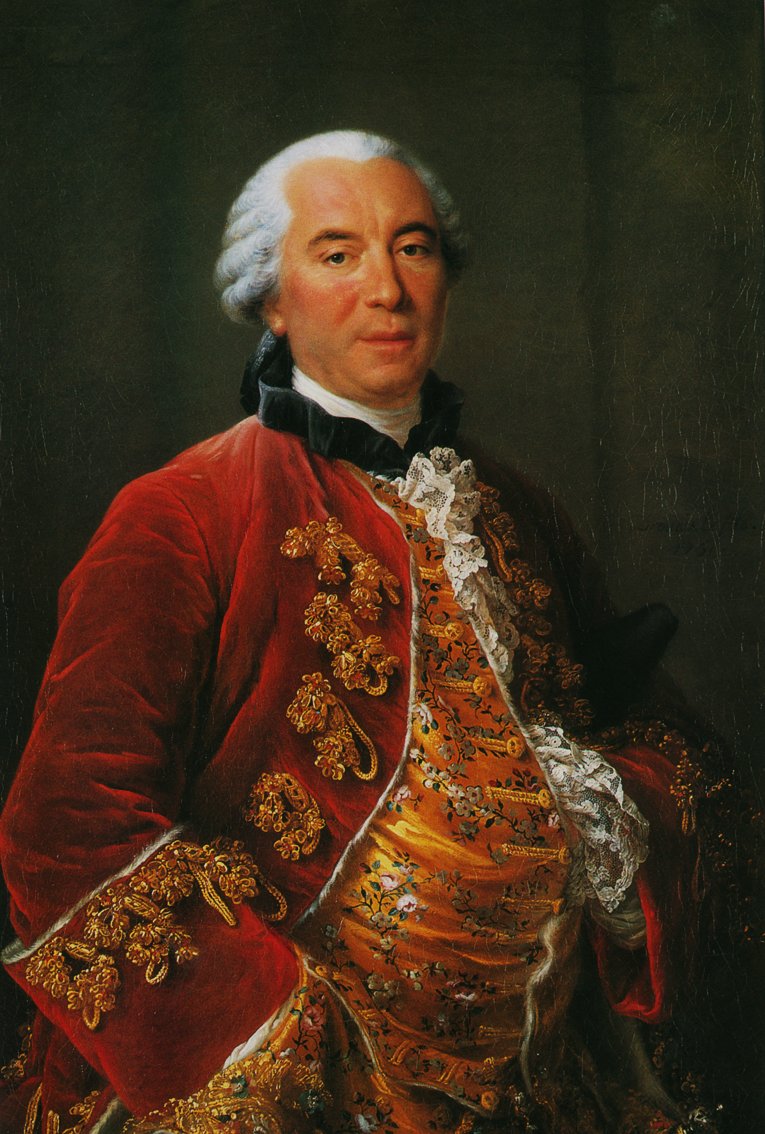 |
Goerges-Louis Leclerc,
Comte de Buffon
► Sheet 1
(Buffon's Needle Experiment)
|
|
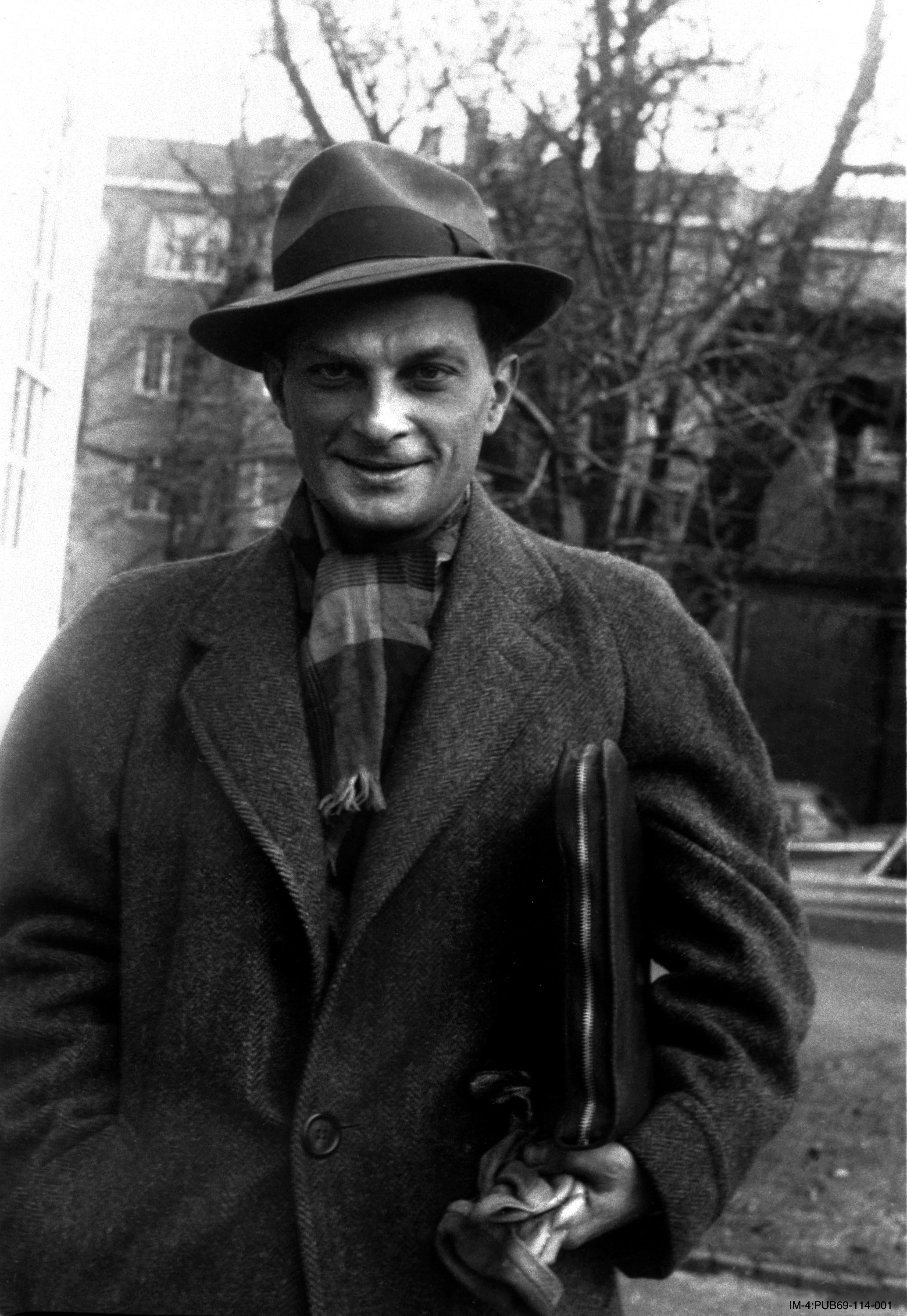 |
Stanislaw Marcin Ulam
► Sheet 2
(Monte Carlo Method)
|
|
 |
Nicholas Constantine
Metropolis
► Sheet 3
(Metropolis Algorithm)
|
| |
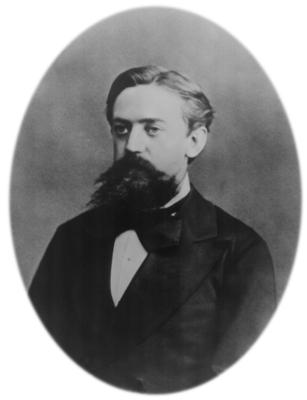 |
Andrey Andreyevich Markov
Sheet 4
(Markov Chain)
|
|
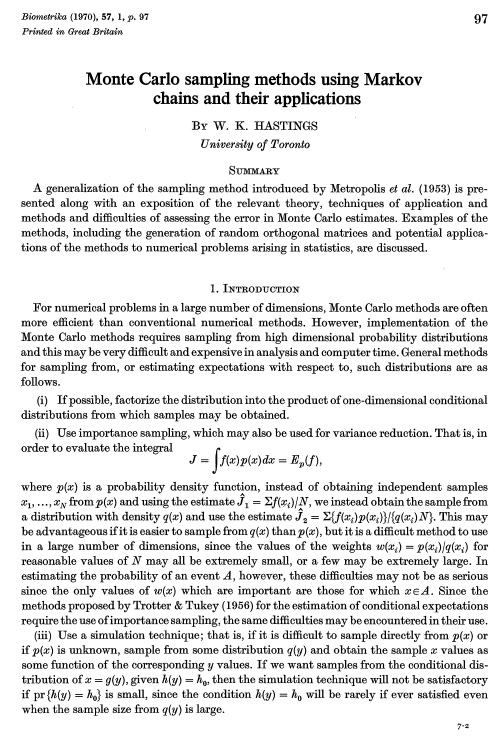 |
W. Keith Hastings
Sheet 5
(Metropolis-Hastings Algorithm)
|
|
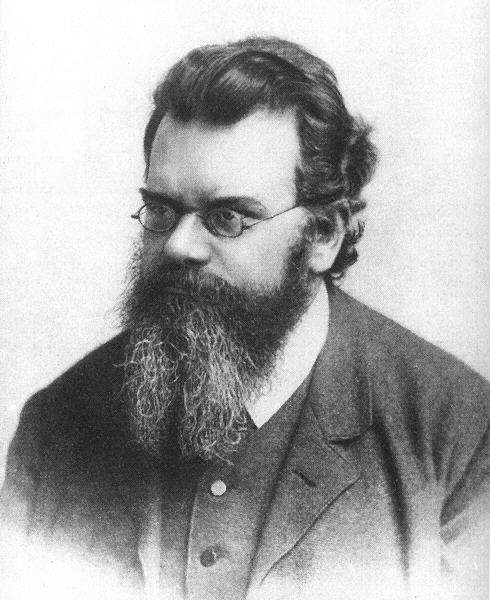 |
Ludwig Eduardo Boltzmann
Sheet 6
(Boltzmann's statistical mechanics)
|
|
| |
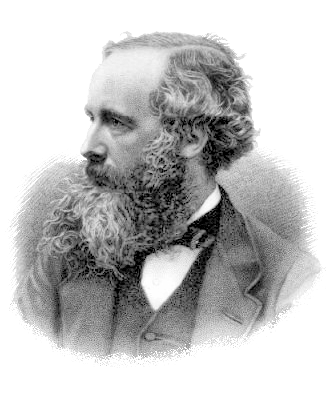 |
James Clerk Maxwell
Sheet 7
(Maxwell Distribution)
|
|
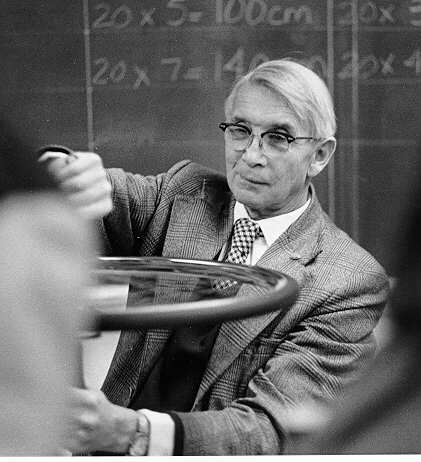 |
Ernst Ising
Sheet 8
(Ising Model)
|
|
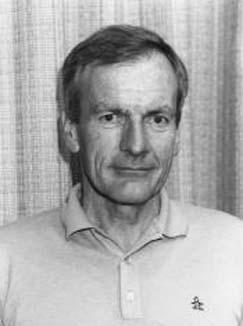 |
Renfrey Potts
Sheet 9
(Potts Model)
|
|
| |
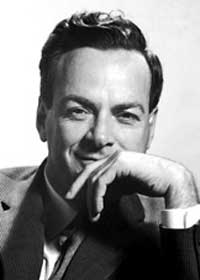 |
Richard Philips Feynman
Sheet 10
(Feynman Path Integral)
|
|
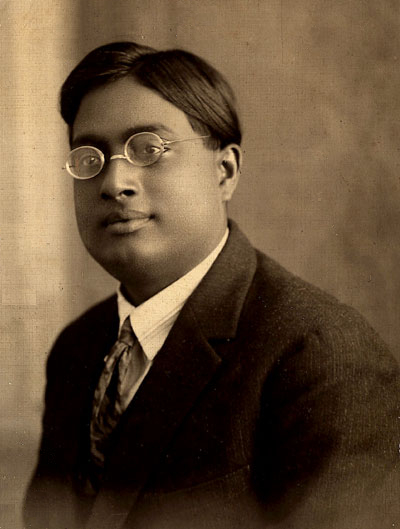 |
Satyendra Nath Bose
Sheet 11
(Bosons)
|
|
|
Sheet 12
(Hopping Parameter Expansion)
|
Literature:
► David P. Landau, Kurt Binder, A Guide to Monte Carlo Simulations in Statistical Physics, Cambridge University Press
► Werner Krauth: Statistical Mechanics: Algorithms and Computations, Oxford University Press
► Andreas Wipf: Statistical Approach to Quantum Field Theory, Springer
► Charles M. Grinstead, J. Laurie Snell: Introduction to Probability
Links on Monte Carlo:
►
Website of Werner Krauth, including some illustrations from his book:
http://www.lps.ens.fr/~krauth/index.php/Main_Page
►
Percolation:
http://www.physics.buffalo.edu/gonsalves/Java/Percolation.html
►
Drunken Sailor Problem (Random Walk): http://www.chem.uoa.gr/applets/AppletSailor/Appl_Sailor2.html
►
Self-avoiding random walk: http://polymer.bu.edu/java/java/saw
►
Applets for 2D Lennard-Jones System, Ising Model, 2D Dipoles:
http://personal-pages.ps.ic.ac.uk/~achremos/Applets-page.htm
►
Applet of Ising Model and XY Model: https://itp.tugraz.at/MML/isingxy
►
Anharmonic Oscillator: http://fisteo12.ific.uv.es/~santamar/arcapplets.html
Links on Lattice Gauge Theory:
Introductory Material:
► Introduction by Rajan Gupta:http://arxiv.org/abs/hep-lat/9807028
► Introductory Presentation by Hartmut Wittig: http://www.gk-eichtheorien.physik.uni-mainz.de/Dateien/Wittig.pdf
Lattice QCD Software Projects:
► FermiQCD: http://web2py.com/fermiqcd
► Columbia Physics System (CPS): http://phys.columbia.edu/~cqft/physics_sfw/physics_sfw.htm
Miscellaneous:
► Lattice QCD Blog: http://latticeqcd.blogspot.com/
► Resources of Michael Creutz: http://latticeguy.net/lattice.html
Last modified: Tue Oct 15 18:50:44 CET 2013